


1. Introduction
Video is no longer optional for brands—it’s a core part of how businesses communicate, engage, and convert their audience. Whether it’s a corporate video, social media reel, or a high-converting ad, video content has become one of the most powerful tools in digital marketing.
Yet, many brands struggle with one key challenge: understanding how video production actually works. From idea to execution, the process can feel complex, time-consuming, and sometimes overwhelming.
This guide breaks down the complete video production process for brands, helping you understand how professional videos are created—from script to final screen. If you’re planning to invest in corporate video production or brand video marketing, this step-by-step breakdown will give you clarity and confidence.
2. What is Video Production for Brands?
Video production for brands is the process of creating visual content that communicates a company’s message, promotes its products or services, and connects with its target audience.
This can include:
-
Corporate videos to build brand identity
-
Promotional videos for marketing campaigns
-
Social media videos for engagement
-
Explainer videos to simplify complex ideas
A structured video production process ensures that every stage—from planning to execution—is aligned with business goals. Without a clear workflow, brands often end up with videos that look good but fail to deliver results.
3. Stage 1: Pre-Production – Planning Everything Right
Pre-production is the foundation of successful brand video production. This is where ideas are shaped into a clear plan.
It starts with defining the goal. Is your goal to build brand visibility, attract more leads, or boost sales performance? Without a clear objective, even the most visually appealing video can miss its purpose.
Next comes understanding your target audience. A video meant for young social media users will look very different from one targeting corporate clients. Knowing your audience helps shape the tone, visuals, and messaging.
Scriptwriting is where the core message takes form. A strong script keeps the content focused, engaging, and easy to understand. This is followed by storyboarding, where each scene is visually mapped out to avoid confusion during the shoot.
Budget and timeline planning are equally important. They ensure that the project stays on track without unnecessary delays or cost overruns.
In reality, pre-production determines most of the video’s success. Skipping or rushing this stage often leads to expensive mistakes later.
4. Stage 2: Production – Bringing the Vision to Life
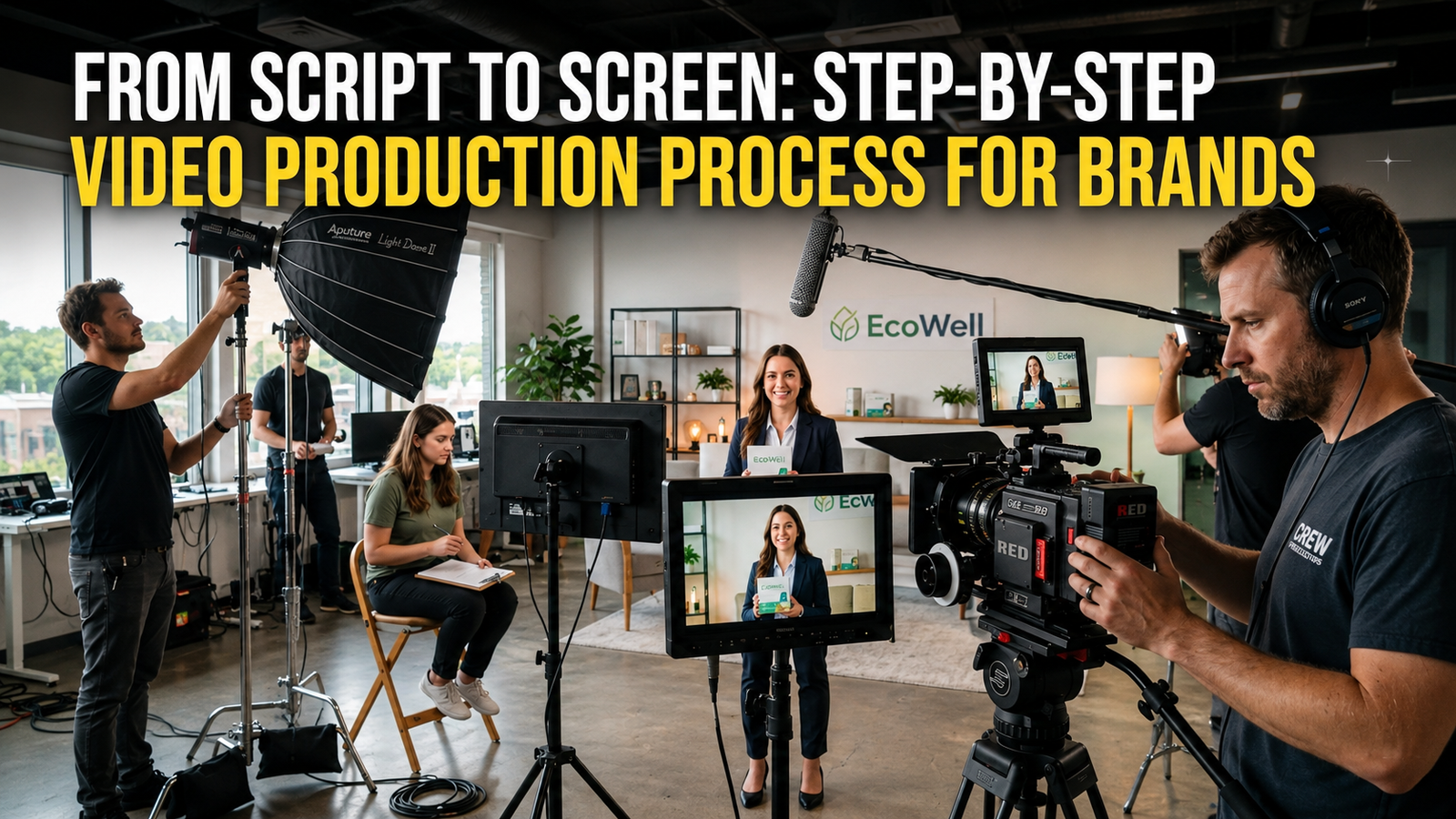
This is the stage where your ideas finally come to life. The production phase involves shooting the video using professional equipment and a skilled team.
It begins with setting up cameras, lighting, and audio. Good lighting and clear sound are critical—poor quality here can ruin even the best concept.
The director ensures that every shot aligns with the script and storyboard. Whether it’s working with actors, employees, or real customers, proper guidance is essential to capture authentic and engaging footage.
Multiple takes and angles are recorded to give flexibility during editing. This ensures that the final output looks polished and professional.
A well-managed production phase ensures efficiency and quality, especially for corporate video production and advertising campaigns.
5. Stage 3: Post-Production – Crafting the Final Story
Post-production is where everything comes together. Raw footage is transformed into a compelling visual story.
The process starts with video editing, where clips are arranged in sequence to create a smooth narrative. Then comes color correction and grading, which enhances the visual appeal and consistency of the video.
Sound design plays a major role here. Background music, voiceovers, and sound effects add emotion and depth to the content.
Motion graphics and text overlays are often added to highlight key messages, especially in explainer videos and promotional content.
Finally, revisions are made based on feedback to ensure the video meets expectations.
This stage is crucial because it turns simple footage into a high-quality marketing asset that reflects your brand identity.
6. Stage 4: Distribution & Marketing
Creating a video is only half the job—getting it in front of the right audience is equally important.
Different platforms require different approaches. A YouTube video may be longer and more detailed, while Instagram or Facebook content needs to be short and engaging.
Optimizing your video for search engines is also essential. Using relevant keywords like video marketing for brands, proper titles, and descriptions can improve visibility.
Brands can choose between organic reach and paid advertising. While organic strategies build long-term engagement, paid ads deliver quicker results.
Tracking performance through metrics like views, engagement, and conversions helps measure success and improve future campaigns.
7. Common Mistakes Brands Should Avoid
Many brands make avoidable mistakes during the video production process, such as:
-
Skipping proper planning and jumping straight into shooting
-
Ignoring the target audience
-
Trying to include too many messages in one video
-
Compromising on audio and lighting quality
-
Not optimizing videos for different platforms
Avoiding these mistakes can significantly improve the effectiveness of your video content.
8. How to Choose the Right Video Production Company
Choosing the right partner is crucial for successful professional video production.
Start by reviewing their portfolio to understand their style and quality. Choosing a team with industry-specific experience can help ensure they better understand your business needs.
Pricing is important, but it shouldn’t be the only factor. Focus on the value they provide—strategy, creativity, and execution.
Clear communication and a structured workflow are also essential. A good production company will guide you through every stage, not just handle the technical aspects.
9. How IQ Media Helps Brands Succeed
At IQ Media, the focus goes beyond just creating videos—it’s about delivering results-driven video marketing solutions.
Each project begins with a detailed discussion about your business objectives and expectations. Whether it’s increasing brand awareness or driving conversions, the strategy is tailored accordingly.
From scriptwriting to final delivery, IQ Media handles the entire end-to-end video production process. The team combines creative storytelling with high-quality production to create content that connects with your audience.
Videos are also optimized for multiple platforms, ensuring they perform effectively across social media, websites, and ad campaigns.
From corporate films and promotional ads to engaging social media videos, IQ Media creates compelling visuals that help your brand leave a strong impression.
10. FAQs – Video Production Process
1. How long does the video production process take?
It usually takes between 2 to 6 weeks, depending on the complexity, planning, and revisions involved.
2. How much does a brand video cost?
Video production pricing can range from ₹20,000 to ₹5,00,000 or higher, depending on factors like video length, production quality, and project scope.
3. What is the most important stage in video production?
Pre-production is the most important stage because it defines the strategy, script, and overall direction.
4. Is video production a good investment for small businesses?
Yes, even small businesses can benefit from video marketing by focusing on clear messaging and smart budgeting.
5. What type of video works best for marketing?
It depends on your goal—explainer videos for education, ads for conversions, and corporate videos for brand trust.
11. Conclusion
The journey from script to screen involves careful planning, creative execution, and strategic distribution. Each stage of the video production process plays a vital role in creating content that not only looks good but also delivers results.
For brands, investing in professional video production is no longer a luxury—it’s a necessity in today’s competitive market. When done right, video becomes a powerful tool to build trust, engage audiences, and drive growth.
12. Call to Action (CTA)
Ready to take your brand to the next level with high-quality video content?
Whether you need a corporate video, ad film, or social media content, the right strategy and execution can make all the difference.
Call us today
Get a FREE Website & Video Audit
Book a Free Consultation
Turn your ideas into powerful visual stories with IQ Media—content that connects, engages, and drives real results.