


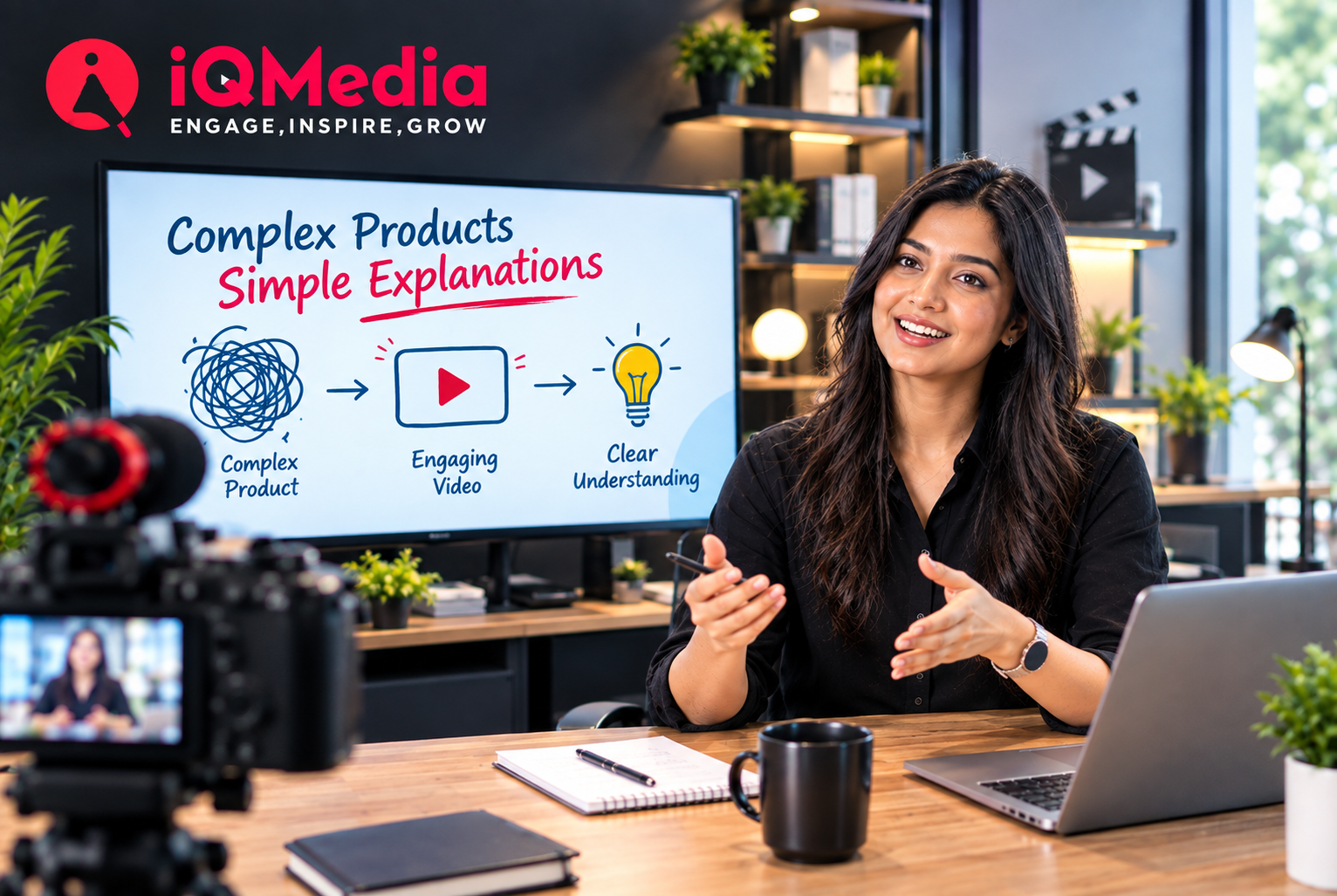
Explaining a complicated product or service is not always easy. A business may have a technical product, a detailed process, software with multiple features or a service that takes several steps to understand. Long paragraphs and product brochures may provide information, but they do not always make the concept easy to understand.
Video gives businesses a practical way to simplify these ideas. By combining visuals, narration, demonstrations, animation and storytelling, companies can explain what they offer in a way that is easier for customers to follow.
The goal is not simply to create an attractive video. It is to make the message clear enough for the viewer to understand the product, service or process and know what to do next.
Why Is Video Effective for Complex Products and Services?
Video brings different types of information together in one format. A viewer can see a product being used, listen to an explanation and follow graphics that highlight important details.
For example, a manufacturing company can show how equipment operates instead of explaining every stage through text. A software company can record its interface and demonstrate how users complete a task. A service business can visually explain its process from the first step to the final result.
This makes video particularly useful when the subject involves processes, technical details or information that is difficult to describe with words alone.
Start With the Customer's Problem
A common mistake is trying to include every product feature in one video. Too much information can make the explanation difficult to follow.
A better approach is to begin with the problem the customer is trying to solve. Once the problem is clear, the product or service can be introduced as the solution.
For example, instead of opening a product video with a list of specifications, show the challenge customers commonly face and then demonstrate how the product helps address it.
This creates a more meaningful connection because the viewer can relate the product to a real situation.
Demonstrate How the Product Works
Some products are much easier to understand when people can see them in action.
Businesses can use demonstrations to show:
-
How a product is operated
-
How a service is delivered
-
How a process works
-
How specific features are used
-
What happens before and after using the solution
-
How customers can get started
For technical products and industrial equipment, close-up shots, demonstrations and supporting graphics can make complex details easier to understand.
A video production company in Coimbatore can bring these elements together through concept planning, scripting, filming, narration and post-production.
Use Animation When Live Footage Is Not Enough
A camera cannot show everything. Internal machine mechanisms, software workflows and abstract concepts may be difficult to explain using live-action footage alone.
Animation and motion graphics can fill this gap. For instance, a manufacturing business can use animation to show the internal movement of a machine. A technology company can use animated graphics to explain how data moves through a system.
Live footage and animation can also be combined. This allows businesses to show the real product while using graphics to explain information that cannot be seen directly.
Build the Explanation Around a Simple Story
Even technical information can be easier to understand when it follows a logical sequence.
A useful structure is:
Problem → Solution → How It Works → Key Benefits → Next Step
This keeps the viewer moving from one idea to the next without unnecessary information.
From a production perspective, the script should come before the visual treatment. Once the main message is clear, a storyboard can determine which scenes, graphics, animations and supporting shots are actually required.
This prevents the video from becoming a collection of attractive shots without a clear purpose.
Match the Video to the Audience
A technical expert and a first-time customer may need very different explanations of the same product.
Before production begins, businesses should consider:
-
Who is the target viewer?
-
What do they already know?
-
What problem are they trying to solve?
-
Which information is most important to them?
-
Where will they watch the video?
A technical audience may need detailed demonstrations, while potential customers may respond better to a shorter explanation focused on benefits and practical use.
Choosing the right approach before filming can make the final video more useful and focused.
How Professional Editing Supports the Message
Good footage alone does not guarantee a good explanation. Editing determines how the information is organised and how easily viewers can follow it.
Professional editing can improve pacing, remove unnecessary sections, add captions, highlight important information and combine footage with motion graphics. Sound design and colour correction can also help create a consistent viewing experience.
A video editing agency Coimbatore can turn raw footage into structured content that works across websites, presentations, YouTube and social media.
The purpose of editing should always be clarity. Effects and transitions should support the message rather than distract from it.
Which Types of Business Videos Can Explain Complex Ideas?
Different business goals call for different video formats.
Product Explainer Videos
These can introduce a product, demonstrate how it works and explain its main benefits.
Corporate Videos
A corporate video can communicate a company's story, capabilities, people and services while giving customers a better understanding of the organisation.
Training Videos
Training content can turn detailed procedures into step-by-step visual lessons for employees, customers or partners.
Promotional Videos
Promotional content can explain a product or service while supporting launches, campaigns and brand communication.
Animation and Motion Graphics
These formats are useful when a concept, process or technical feature is difficult to demonstrate through live-action footage.
Repurpose Video Content for Different Platforms
A single production can often create more than one piece of content.
A long product or corporate video can be divided into shorter clips for social media. Specific sections can become educational videos, while selected footage can be used in presentations, advertisements or website content.
Planning for repurposing during production can make this easier. Businesses can capture different framing, close-up shots and short sequences that can later be adapted for different platforms.
This allows one production project to support multiple communication needs.
How to Choose a Video Production Partner
When evaluating media production companies in Coimbatore, businesses should consider more than cameras and equipment.
Look at whether the production team understands the subject, asks questions about the target audience, develops a suitable concept and can handle the process from planning to final delivery.
A complete production may include research, scripting, storyboarding, filming, editing, animation, motion graphics, sound design and final delivery.
If a business already has footage, a video editing company coimbatore can also help organise the material and turn it into polished content suitable for different platforms.
The right production partner should focus on communicating the business message clearly, not simply making the video look impressive.
Frequently Asked Questions
1. What businesses can use video to explain complex products?
Technology, manufacturing, healthcare, education, professional services, retail and many other businesses can use video to simplify products, services and processes.
2. How long should an explainer video be?
There is no universal duration. The video should contain enough information to answer the viewer's main question without adding unnecessary details.
3. Is animation useful for technical products?
Yes. Animation can explain internal mechanisms, workflows and concepts that may not be visible through normal filming.
4. Can existing footage be used to create a business video?
Yes. Existing footage can be improved with editing, narration, captions, motion graphics, animation and sound design.
5. Where can businesses publish explanation videos?
Videos can be used on websites, landing pages, YouTube, LinkedIn, social media, presentations, sales meetings and training platforms depending on the intended audience.
Conclusion
Complex products and services do not have to be difficult to explain. With the right combination of storytelling, demonstrations, animation, visuals and editing, businesses can turn detailed information into content that is easier for customers to understand.
The most effective approach starts with the audience and the problem they want to solve. Once the message is clear, the right video format, production style and distribution channels can be selected.
For businesses that need professional visual communication, IQMedia brings together video production, editing, animation and post-production to create purposeful content for different business needs.