


Introduction
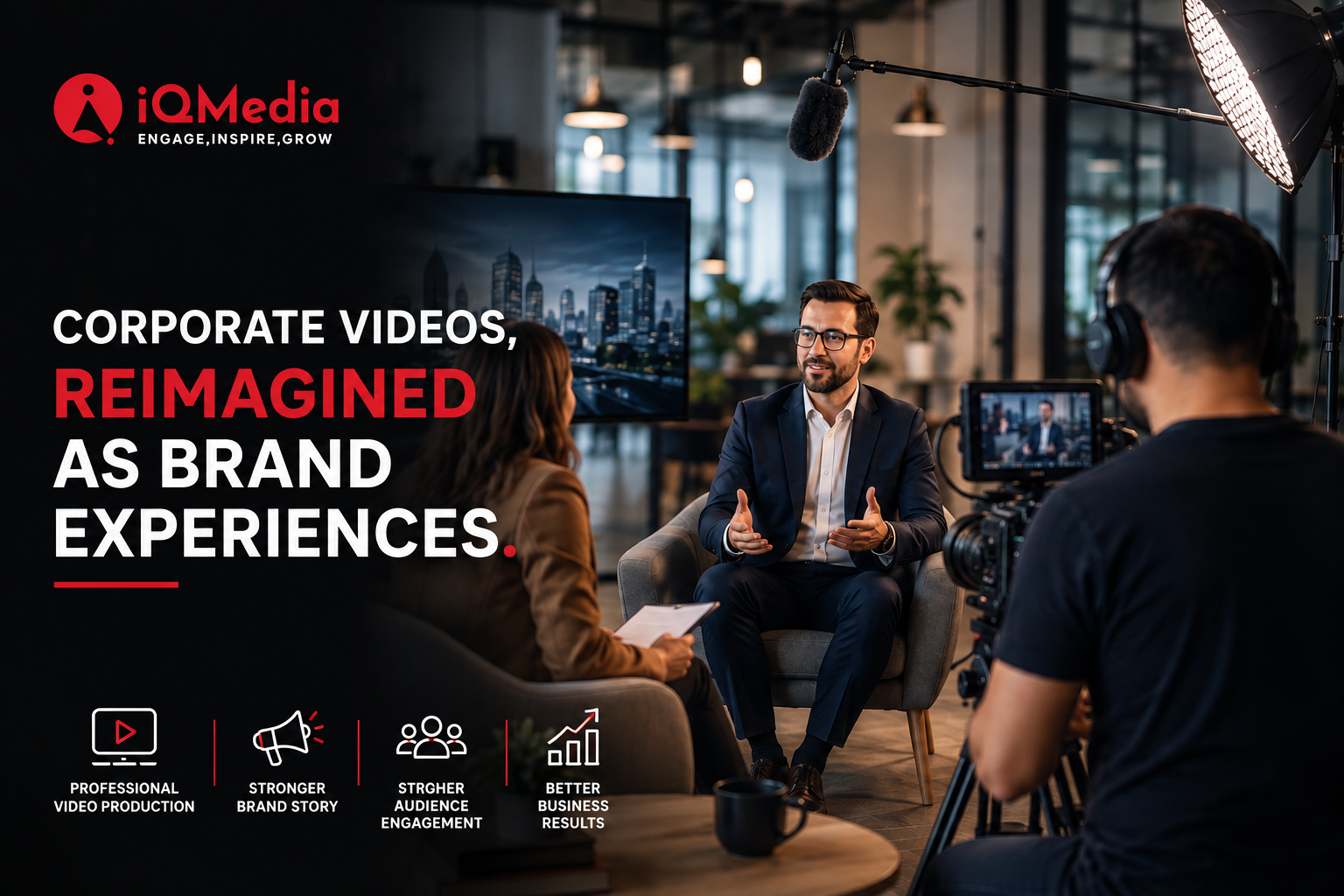
Corporate videos are no longer limited to office tours, formal interviews, or a company executive speaking directly to the camera. In 2026, businesses are using video to create experiences that people can connect with, remember, and share.
Today's audiences expect more than information. They want stories, strong visuals, authentic people, useful insights, and content that feels relevant to the platform they are watching it on.
This shift is changing how businesses approach corporate video production. Instead of creating one long film and using it everywhere, brands are developing video content around their audience, message, and marketing goals.
Why Corporate Videos Are Changing in 2026
The way people consume business content has changed significantly. A potential customer might discover a company through a short social media video, learn more through a brand film, watch an employee story on LinkedIn, and then visit the website before making a decision.
This means corporate video now needs to work across multiple touchpoints.
A modern corporate video can help a business:
-
Explain what it does
-
Introduce its people and culture
-
Build credibility
-
Showcase products or services
-
Support marketing campaigns
-
Strengthen employer branding
-
Create social media content
-
Explain complex ideas
The focus is moving from simply showing a company to creating an experience around the brand.
Storytelling Is Taking Centre Stage
One of the biggest changes in corporate video is the growing importance of storytelling.
Instead of simply saying, "We are a leading company with excellent services," a stronger video can show the people behind the business, the problem they solve, the challenges they overcome, and the value they provide.
A good story gives viewers a reason to care.
For example, a manufacturing company could show how an idea becomes a finished product. A technology business could demonstrate how its solution addresses a real customer problem. An organisation could introduce the people whose work drives its mission.
This approach makes corporate content feel less like a traditional advertisement and more like an authentic brand experience.
From One Corporate Film to Multiple Content Formats
Another major change is the way businesses repurpose video content.
A single production can now become multiple pieces of content rather than one finished corporate film. Longer footage can be adapted into shorter videos for LinkedIn, Instagram, YouTube, websites, presentations, and digital campaigns.
A modern video strategy might include:
-
Corporate brand films
-
Short-form social videos
-
Product videos
-
Interview clips
-
Training content
-
Event videos
-
Explainer videos
For businesses searching for a video production company in Coimbatore, this broader approach can provide more value than simply creating one finished video.
Creating Visual Experiences That Support the Message
High-quality cameras and cinematic visuals can make a video look impressive, but technology alone does not create an effective brand experience.
Every visual element should support the story and message.
Production planning, scripting, storyboarding, cinematography, editing, colour grading, sound design, animation, and visual effects can all contribute to the final experience.
For instance, carefully planned cinematography can establish the right mood, while motion graphics can simplify information that may otherwise be difficult to understand. Appropriate music and sound design can also influence how viewers experience a scene.
The objective is not to add effects simply because they look impressive. Each creative decision should have a purpose.
The Growing Role of Animation and Motion Graphics
Not every business message can be communicated effectively through live-action footage alone.
Animation and motion graphics can be particularly useful for explaining products, processes, data, software, technical concepts, and ideas that are difficult to capture on camera.
For example, a technology company could use animation to demonstrate how its platform works. A manufacturing business could visualise an internal process, while a training team could use motion graphics to simplify complex instructions.
When used thoughtfully, animation, motion graphics, and VFX can complement live-action footage and make corporate communication easier to understand.
Why Post-Production Has Become More Strategic
Post-production is no longer simply the final step after filming. It plays a major role in shaping the story and determining how audiences experience the finished video.
Professional post-production may involve:
-
Colour grading
-
Voice-over
-
Music
-
Sound design
-
Audio mixing
-
Motion graphics
-
Animation
-
Visual effects
For companies searching for video production Coimbatore, working with a team that understands both production and post-production can help maintain consistency from the first frame to the final delivery.
Good editing can improve pacing, remove unnecessary information, highlight important moments, and make the message easier to follow.
Personalisation Is Becoming More Important
Corporate audiences are not all looking for the same information.
A customer may want to understand a product. An employee may need training content. A potential employee may want to learn about company culture, while a business partner may want to understand the organisation's capabilities.
Creating content around these different needs makes communication more relevant.
Instead of asking only, "What do we want to say?", brands should also ask:
"Who is watching, and what do they need to understand?"
That shift can make corporate video more useful and engaging.
What Should Businesses Look for in a Video Production Partner?
Choosing between different media production companies in Coimbatore should involve more than comparing equipment or prices.
Businesses should consider whether a production partner understands:
-
The target audience
-
Brand personality
-
Marketing objectives
-
The story behind the business
-
Distribution platforms
-
Content repurposing opportunities
-
Production and post-production requirements
A strong production process should begin with understanding the business and its objectives before moving into creative development, filming, editing, and final delivery.
This helps ensure that the finished video is not only visually appealing but also aligned with the reason it was created.
Why End-to-End Production Can Add Value
An experienced corporate video production company in Coimbatore can manage several stages of a project under one creative direction.
This can include concept development, scripting, storyboarding, production planning, filming, editing, colour grading, sound design, animation, VFX, and final delivery.
Managing these stages through a coordinated workflow can reduce communication gaps and help maintain consistency throughout the project.
It can also make it easier to adapt the finished production into different formats for websites, social media, presentations, and marketing campaigns.
The Future of Corporate Video Is About Experience
Corporate video in 2026 is becoming less about producing one polished film and more about creating a connected content experience.
The strongest videos give people something to understand, feel, remember, or act on.
That could mean a powerful founder story, an engaging product demonstration, a customer-focused brand film, an employee story, or a collection of short-form videos created from one larger production.
Businesses that approach video strategically can get more value from each production while building a stronger and more recognisable brand presence.
Frequently Asked Questions
1. What is a modern corporate video?
A modern corporate video communicates a company's story, people, products, services, or values through engaging visuals, storytelling, sound, animation, and other creative techniques.
2. Can one corporate video be used for social media?
Yes. A longer corporate production can often be adapted into shorter clips for platforms such as LinkedIn, Instagram, YouTube, and other digital channels, depending on the original footage and campaign objectives.
3. Why is professional video editing important?
Editing controls the pace, structure, sound, visual flow, and storytelling of a video. Effective post-production can turn raw footage into a polished and engaging brand experience.
4. How long does corporate video production take?
The timeline depends on the project's complexity, filming requirements, number of locations, creative approach, and post-production work. A simple promotional video may take less time than a larger corporate film involving multiple locations and advanced visual effects.
5. Should corporate videos include animation?
Animation can be useful when it helps explain a product, process, concept, or message that may be difficult to communicate through live-action footage. The right approach depends on the audience, subject, and purpose of the video.
Conclusion
Corporate videos are evolving into complete brand experiences that combine storytelling, strategic messaging, strong visuals, editing, animation, sound, and platform-specific content. In 2026, businesses have an opportunity to use video not simply to present information, but to communicate their identity, build trust, and create meaningful connections with their audiences.
At IQMedia, brands can access end-to-end video production capabilities covering creative development, production, editing, animation, sound design, and visual effects, helping transform ideas into engaging visual experiences.