


Introduction
Artificial intelligence is becoming an important part of modern video production. From organising footage and creating captions to improving audio and supporting visual effects, AI is helping production teams complete several editing tasks faster.
For businesses, this can make video content easier to produce, update, and adapt for different platforms. A single shoot can potentially become a corporate film, social media clips, promotional content, advertisements, and other digital assets.
However, professional video production is not about allowing AI to do everything. Strong videos still require creative thinking, storytelling, visual direction, and an understanding of the audience.
The real advantage comes from combining AI technology with human creativity.
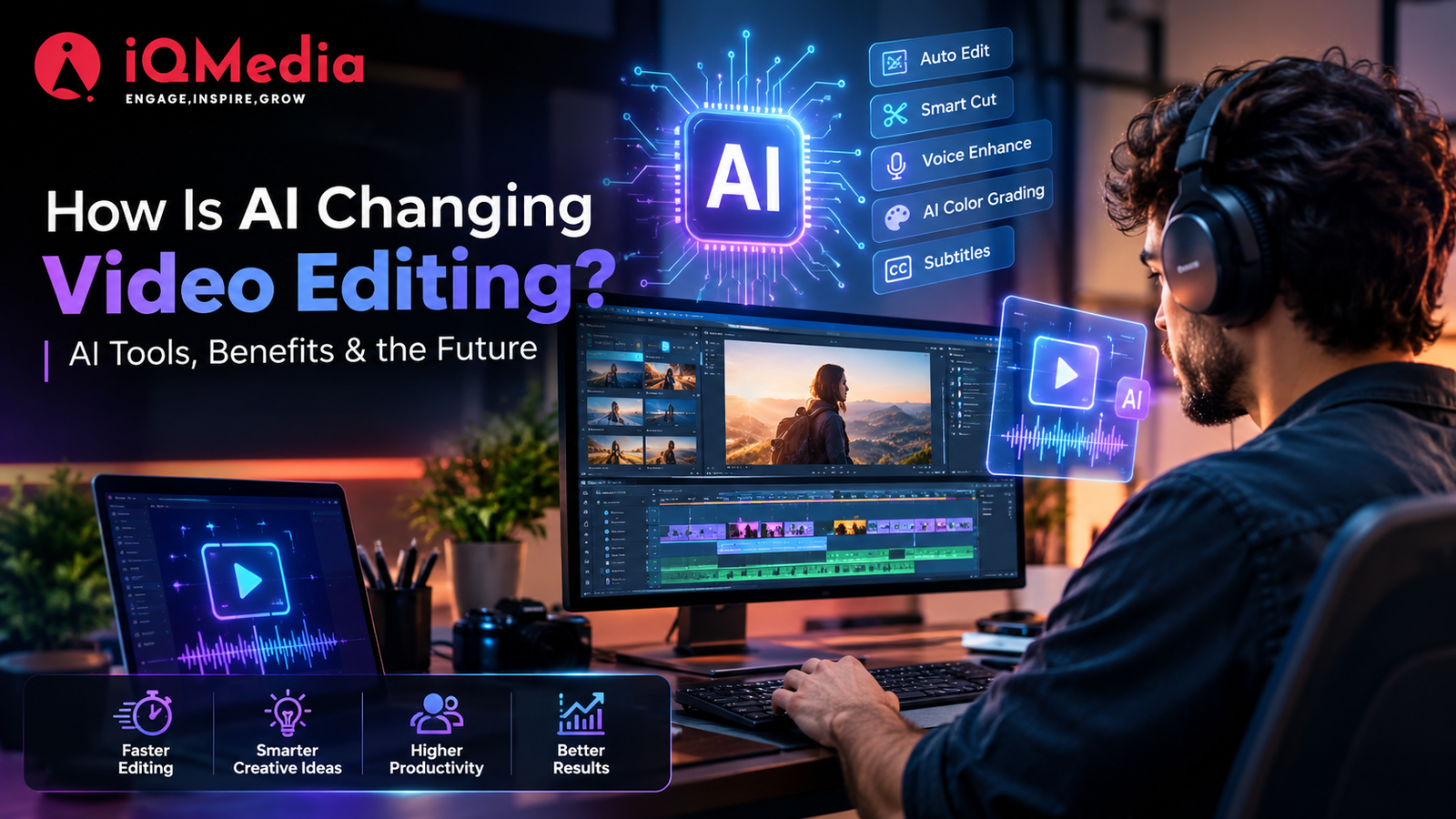
How Is AI Changing Video Editing?
Traditional video editing often involves reviewing large amounts of footage, finding suitable shots, creating captions, improving audio, and preparing different versions for various platforms.
AI-assisted editing tools can now help with many of these repetitive processes.
They can assist editors with:
-
Finding relevant footage
-
Generating transcripts and captions
-
Reducing background noise
-
Detecting objects and subjects
-
Removing or masking unwanted elements
-
Reframing videos for different platforms
-
Identifying useful moments in longer footage
-
Supporting animation and visual effects
This doesn't mean the editor disappears from the process. Instead, AI can handle some of the repetitive groundwork while the editor concentrates on the creative side of the project.
For a video production company in Coimbatore, this can be especially useful when projects involve multiple cameras, interviews, events, or large amounts of footage.
Popular AI Tools Supporting Video Editing
AI features are now available across several professional video and creative platforms.
Adobe Premiere Pro includes AI-assisted features that can support footage search, object masking, transcript-based editing, audio enhancement, and other editing workflows.
DaVinci Resolve combines editing, colour grading, audio, and visual effects while offering AI-powered features for professional post-production.
Runway provides AI-assisted creative tools for areas such as background changes, object manipulation, and visual experimentation.
Descript takes a transcript-based approach that can be particularly useful for interviews, podcasts, presentations, and speech-heavy content.
There is no single AI tool that is perfect for every project. Professional teams choose technology based on the content, creative requirements, audience, and final platform.
How AI Benefits Video Production
Faster Editing Workflows
One of the biggest advantages of AI is reducing repetitive editing time. Tasks such as transcription, caption creation, footage searching, and basic audio cleanup can be completed more efficiently.
This allows editors to spend more time shaping the story and making creative choices.
More Content From One Production
Businesses rarely need just one video today. They may require content for Instagram, YouTube, LinkedIn, websites, advertisements, presentations, and other channels.
AI can help identify useful moments from longer videos and support the creation of shorter versions.
For example, one corporate interview could become a main video, several social media clips, short promotional videos, and captioned content.
Faster Captions and Transcripts
Captions are important for accessibility and social media viewing. AI can generate an initial transcript or subtitle file quickly, allowing editors to review and correct it before publishing.
Better Audio Workflows
Background noise and unclear dialogue can reduce the quality of a video. AI-assisted audio tools can help improve speech clarity and reduce unwanted sounds, giving editors a cleaner starting point for the final mix.
Why Human Creativity Still Matters
AI can process footage, but it doesn't automatically understand a company's identity or the emotions a video needs to create.
A professional editor still needs to decide:
-
Which shots tell the story best
-
How quickly the video should move
-
Where music should change
-
Which moments deserve emphasis
-
How the brand should be represented
-
What the audience should remember
These decisions require experience and creative judgement.
For businesses searching for a video editing agency coimbatore, the important question should not simply be whether the company uses AI. The bigger question is whether the team can use technology while maintaining storytelling and production quality.
AI and Corporate Video Production
Corporate videos have moved beyond simple company introductions. Businesses now use video for brand storytelling, product launches, employee communication, customer testimonials, training, events, recruitment, and marketing campaigns.
AI can support several parts of the post-production process, including footage organisation, captions, audio enhancement, content repurposing, and certain visual effects.
A corporate video production company in Coimbatore can combine these AI-assisted processes with professional filming, editing, colour grading, sound design, animation, motion graphics, and VFX.
This approach is particularly useful when one production needs to create content for multiple marketing channels.
AI in Animation, Motion Graphics and VFX
AI is also influencing creative post-production.
Modern tools can assist with background removal, object masking, visual modifications, rotoscoping, and other repetitive VFX tasks. AI can also help creative teams explore visual concepts and test different ideas more quickly.
But technology should never be used simply for the sake of adding effects.
A visual effect should support the message, match the brand, and improve the viewer's experience. Professional creative direction is still required to decide what belongs in the final video.
What Are the Limitations of AI Video Editing?
AI can make production more efficient, but it is not perfect.
Automated tools may misunderstand context, select an unsuitable clip, create inaccurate captions, or produce visuals that do not match a company's identity.
AI-generated content can also raise questions around originality, copyright, privacy, and responsible use.
For professional business projects, every AI-assisted element should therefore be reviewed by an experienced creative team before the final video is delivered.
What Can We Expect From the Future of AI-Powered Video Editing?
AI will likely become a normal part of professional video production.
Future editing tools may make it easier to search large footage libraries, create multiple content versions, improve audio and visuals, and complete repetitive post-production tasks.
However, the future is unlikely to be completely automated.
As technology handles more technical work, human skills such as storytelling, creative direction, visual judgement, branding, and audience understanding will become even more valuable.
For media production companies in Coimbatore, this creates an opportunity to use AI to improve efficiency while continuing to deliver professional creative work.
How Should Businesses Approach AI Video Production?
Businesses should not choose a production company simply because it uses the latest AI tools.
A strong production partner should first understand the business objective, target audience, brand identity, and purpose of the video.
The technology should then support the creative process.
A professional workflow may include concept development, scripting, production planning, filming, editing, colour grading, sound design, animation, motion graphics, VFX, and final content adaptation.
AI can make some of these stages more efficient, but the quality of the final video still depends on how well the entire process is managed.
Frequently Asked Questions
1. Will AI replace professional video editors?
AI is more likely to assist professional editors than completely replace them. It can handle repetitive tasks while editors remain responsible for storytelling, creative decisions, and quality control.
2. Can AI create multiple videos from one production?
Yes. AI can help identify useful sections and adapt longer content into shorter videos for social media, advertising, websites, and other platforms.
3. Is AI useful for corporate video production?
Yes. AI can assist with footage organisation, captions, audio improvement, content repurposing, and certain visual effects while creative professionals manage the overall story.
4. Can AI improve the quality of a video?
AI can assist with areas such as audio cleanup, noise reduction, masking, and certain visual enhancements. However, professional review is still important to achieve a consistent final result.
5. Should businesses use AI for video marketing?
AI can improve efficiency and help businesses create more content from existing footage. The best results come when AI is combined with professional production and creative expertise.
Conclusion
AI is changing video editing by making repetitive processes faster and giving production teams new ways to organise, enhance, and repurpose content. From captions and footage searches to audio enhancement, animation, and VFX, AI is becoming a valuable part of modern post-production.
But great video content still depends on more than technology. Storytelling, creative direction, brand understanding, and audience connection remain essential.
At IQMedia, modern technology works alongside professional video production and post-production expertise to help businesses create engaging corporate, promotional, social media, animation, motion graphics, and visual content that supports their brand goals.