


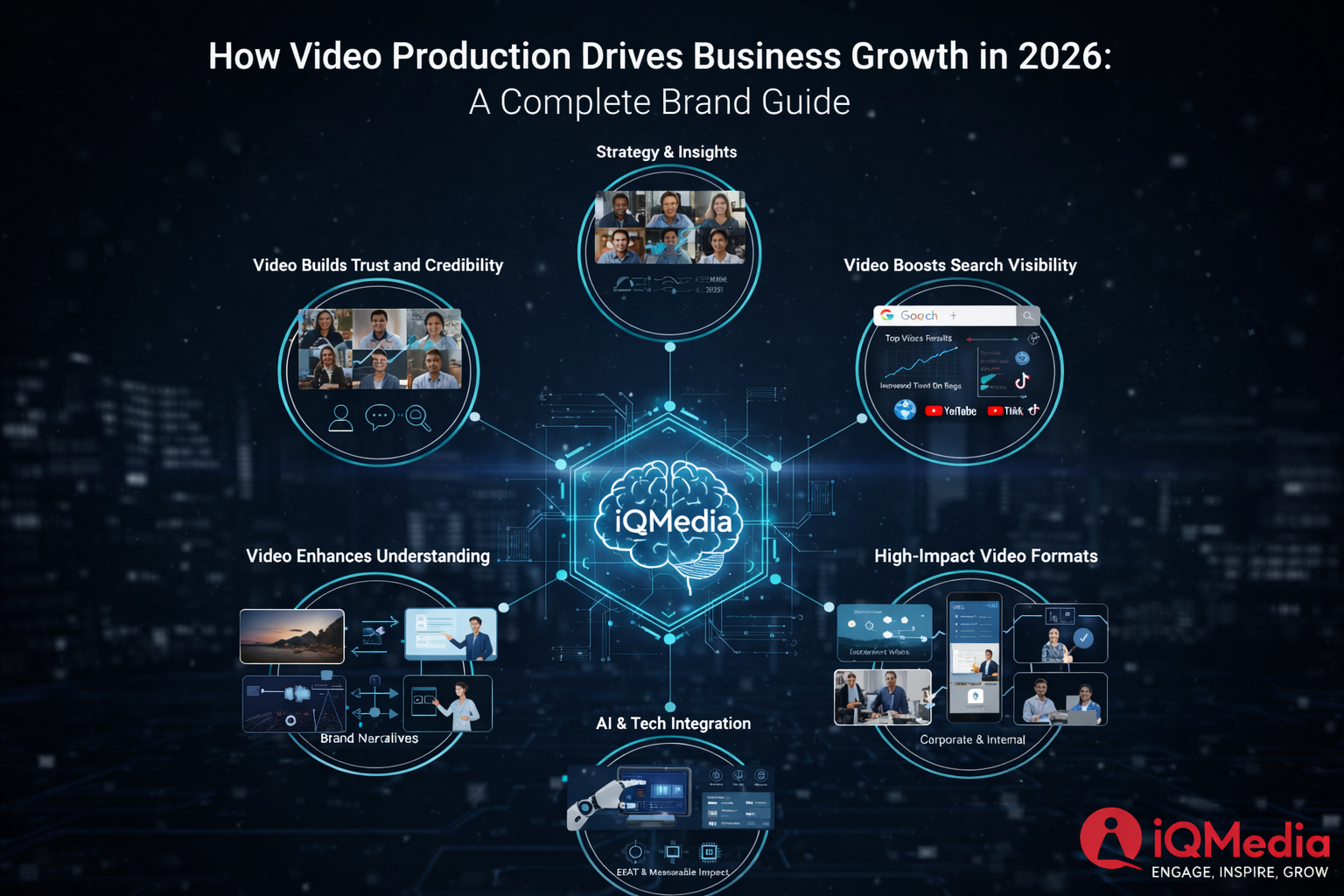
In 2026, video production is no longer just a marketing add-on — it has become a core component of modern business growth strategies. With shrinking attention spans, AI-powered platforms, and video-first algorithms shaping discovery across Google, YouTube, Instagram, and TikTok, organizations are increasingly prioritizing video as a primary communication format.
Based on industry research and trends observed across digital media ecosystems, video-first approaches are playing a growing role in how brands build visibility, credibility, and audience engagement. This guide explores how video production contributes to business growth in 2026, the formats proving most effective, and how organizations can approach video strategically for long-term impact.
The Role of Video Production in Modern Business Growth
1. Video Builds Trust and Brand Credibility
Audiences in 2026 place a high value on authenticity and clarity. Video enables organizations to communicate more transparently by:
-
Presenting real people, processes, and perspectives
-
Using storytelling to explain purpose and values
-
Demonstrating expertise in a human and accessible way
Research across digital marketing disciplines consistently shows that audiences tend to trust video-based communication more than static text alone when evaluating unfamiliar brands or ideas.
2. Video Supports Search Visibility and Content Performance
Search platforms increasingly prioritize multimedia content. Pages that include relevant, well-optimized video often benefit from:
-
Increased time spent on page
-
Improved engagement signals
-
Greater eligibility for video-rich search features
As search engines continue to emphasize experience, expertise, and originality, video has become an important format for communicating depth and context alongside written content.
3. Video Enhances Understanding and Decision-Making
Video is particularly effective for explaining complex topics. Across industries, organizations use video to:
-
Break down complicated concepts visually
-
Address common questions or challenges
-
Present information in a structured, digestible format
When used thoughtfully, video can reduce confusion and help audiences make more informed decisions.
High-Impact Video Formats in 2026
1. Brand and Narrative Videos
Narrative-driven videos communicate an organization’s mission, values, and long-term vision. These formats are commonly used for:
-
Homepage introductions
-
Corporate presentations
-
Organizational storytelling
Strong narratives help audiences understand not just what a brand does, but why it exists.
2. Explainer and Educational Videos
Explainer videos remain widely used in 2026 due to their ability to simplify complex subjects. Effective explainers typically:
-
Focus on clarity over promotion
-
Use visual structure to reinforce learning
-
Prioritize audience understanding
These videos are especially valuable in technical, B2B, and service-oriented industries.
3. Short-Form Video Content
Short-form video continues to dominate social and mobile-first platforms. Organizations use these formats to:
-
Share quick insights or highlights
-
Increase engagement on social channels
-
Adapt longer content into smaller, accessible segments
Their effectiveness lies in concise messaging and platform-specific optimization.
4. Corporate and Internal Video Content
Beyond external marketing, video plays an important role internally. Common applications include:
-
Training and onboarding
-
Internal communications
-
Employer branding
Well-produced corporate video supports consistency and clarity across distributed teams.
The Role of AI and Technology in Video Production
Advances in AI have significantly influenced video production workflows. In 2026, commonly used capabilities include:
-
Automated editing assistance
-
Captioning and translation
-
Performance-based content optimization
-
Personalization at scale
Despite these advances, strategic planning, creative direction, and storytelling remain human-led disciplines. Technology enhances efficiency, but content effectiveness still depends on intent and execution.
Video Production and EEAT Principles
High-performing video content aligns closely with EEAT (Experience, Expertise, Authoritativeness, Trustworthiness) principles.
-
Experience: Real-world examples, behind-the-scenes content, and documented processes
-
Expertise: Educational formats and subject-matter insights
-
Authoritativeness: Consistent quality, clarity, and topic relevance
-
Trustworthiness: Transparent messaging and authentic presentation
Video offers a direct way to communicate these signals when produced with care and accuracy.
Measuring the Impact of Video Content
Organizations assessing video effectiveness in 2026 commonly track metrics such as:
-
Watch time and audience retention
-
Engagement signals (shares, comments, saves)
-
Click-through behavior
-
Conversion-related outcomes tied to specific goals
Evaluation focuses not only on reach, but on how video supports broader business and communication objectives.
Building a Sustainable Video Strategy
Rather than treating video as a one-off initiative, many organizations approach it as an ongoing capability. Common characteristics of sustainable strategies include:
-
Clear alignment with business priorities
-
Consistent production standards
-
Multi-platform adaptability
-
Regular performance review and iteration
A structured approach helps ensure video content remains relevant and effective over time.
Final Thoughts: Video as a Long-Term Business Capability
Video production in 2026 represents more than a tactical marketing choice — it is a long-term communication asset. When integrated thoughtfully, video can contribute to:
-
Stronger brand understanding
-
More engaged audiences
-
Clearer knowledge sharing
-
Durable digital presence
By combining storytelling principles, evolving technology, and content best practices, organizations can position video as a meaningful part of their growth strategy in the years ahead