


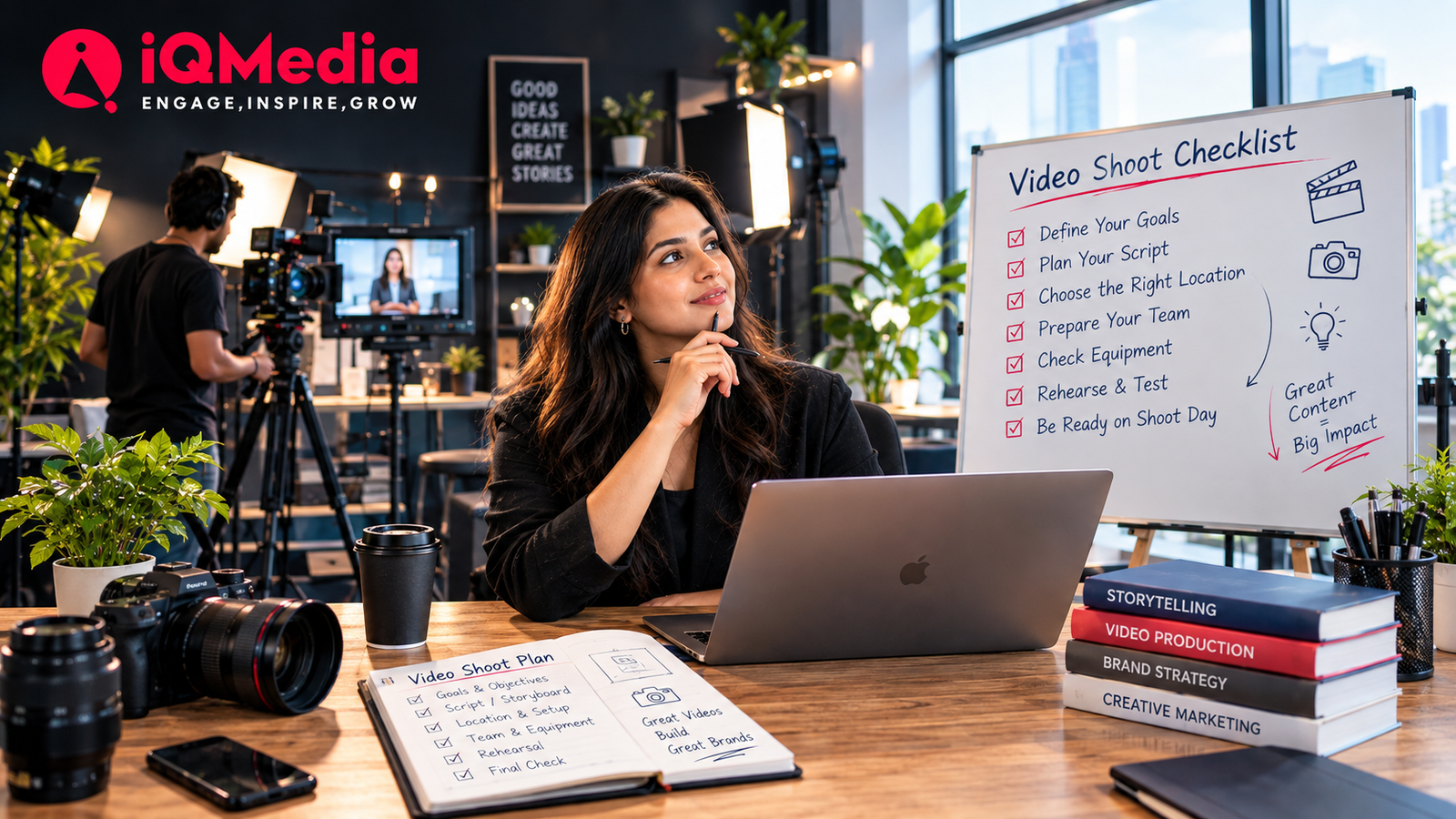
A professional video shoot is easier when the planning is done before the camera starts rolling. Clear preparation helps reduce delays, avoid unnecessary retakes and ensure the final video communicates your business effectively.
Whether you are planning a corporate film, product video, promotional content, interview or social media video, knowing what to prepare can make the production process smoother and more productive.
What Do You Need to Prepare Before a Professional Video Shoot?
Before a professional video shoot, prepare the video objective, target audience, key message, script or talking points, shot list, location, speakers, products, props, brand assets and schedule. You should also decide where the video will be published and discuss the required formats with your production team.
1. Start With a Clear Video Objective
Before discussing cameras, locations or editing, decide what the video needs to achieve.
Ask:
-
Who is the target audience?
-
What should viewers understand?
-
Is the goal awareness, education, enquiries, recruitment or brand trust?
-
Where will the video be published?
-
What should viewers do after watching?
A clear objective helps a video production company in Coimbatore choose the right style, structure and visuals.
2. Prepare the Main Message and Script
Your video should have one clear central message. Prepare the important information your production team needs, including:
-
Main product or service
-
Customer problem
-
Key benefits
-
Important features
-
What makes your business different
-
Call to action
For interviews, a list of questions and talking points may be enough. For scripted promotional or corporate videos, a detailed script may be more appropriate.
A corporate video production company in Coimbatore can also help refine the message and turn business information into a stronger visual story.
3. Create a Practical Shot List
A shot list helps everyone understand what needs to be captured. It can include:
-
Founder or employee interviews
-
Office or facility visuals
-
Team activities
-
Customer interactions
-
Product close-ups
-
Equipment or manufacturing processes
-
Exterior shots
-
Supporting B-roll
You do not need to decide every camera angle. The production team can handle technical planning while you provide what must appear.
4. Prepare the Shooting Location
The location affects both visual quality and shooting efficiency. Before filming, check:
-
Background and cleanliness
-
Lighting conditions
-
Noise from traffic, machinery or nearby activity
-
Space for cameras and lights
-
Power availability
-
Parking and access
-
Employee movement
-
Required permissions
For outdoor shoots, consider weather conditions and keep a backup option.
5. Prepare Employees and Speakers
Employees who rarely appear on camera may feel nervous, so simple preparation helps.
Encourage speakers to:
-
Understand the main message rather than memorise every word
-
Speak clearly and at a comfortable pace
-
Use simple language
-
Pause between important points
-
Wear suitable professional clothing
-
Practise key answers before filming
Natural responses are often more engaging than heavily memorised answers.
6. Prepare Products, Props and Brand Essentials
Everything that appears on camera should be ready before the crew arrives.
Prepare:
-
Products and packaging
-
Company uniforms
-
Tools or equipment
-
Demonstration materials
-
Props
-
Brochures or promotional materials
-
Working machinery or devices
Organise your logo, brand guidelines, colours, fonts and product images so graphics remain consistent during post-production.
7. Decide Where the Video Will Be Used
Think about distribution before filming. A video made for a website may have different requirements from one designed for Instagram or LinkedIn.
Tell your production team whether you need:
-
Website video
-
YouTube content
-
Vertical social media videos
-
Digital advertisements
-
Presentation videos
-
Short cut-down versions
-
Subtitled versions
Planning early allows the crew to consider framing and composition. Media production companies in Coimbatore can also help adapt content for multiple platforms.
8. Build a Realistic Shoot Schedule
A professional shoot needs time for setup, sound checks, preparation and retakes.
Your schedule can include:
-
Crew arrival and setup
-
Speaker arrival
-
Product or service demonstrations
-
Location changes
-
Breaks
-
Additional takes
-
Equipment pack-up
Assign one person from your business to coordinate with the production team and make quick decisions when required. This prevents confusion when several people are involved.
9. Plan the Editing and Review Process
Filming is only one stage. Post-production can include editing, colour correction, sound design, voice-over, motion graphics, animation, subtitles and formatting.
Before the shoot, decide:
-
Who will review the first cut?
-
Who has final approval?
-
What information must appear on screen?
-
Which formats are required?
-
Where will subtitles or graphics be needed?
A video editing agency in Coimbatore can turn raw footage into a structured final video, while a video editing company in Coimbatore can create shorter platform versions.
10. Choose the Right Production Partner
If you are hiring a professional team, look beyond the camera equipment. Look at similar past projects to see how the team approaches planning, filming and post-production.
Before confirming a partner, clarify:
-
Concept and creative development
-
Scriptwriting
-
Pre-production
-
Number and type of deliverables
-
Filming requirements
-
Editing and revisions
-
Motion graphics or animation
-
Timeline
-
Final file formats
Look for a team that understands your objective, communicates clearly and can deliver the required quality and formats.
Quick Pre-Shoot Checklist
Before the shoot, confirm:
-
✓ Clear video objective
-
✓ Target audience
-
✓ Approved script or talking points
-
✓ Shot list
-
✓ Interview questions
-
✓ Prepared location
-
✓ Confirmed speakers
-
✓ Products and props
-
✓ Brand assets
-
✓ Shoot schedule
-
✓ Platform requirements
-
✓ Permissions
-
✓ Person responsible for approvals
How Professional Video Production Can Help
Good preparation makes professional production more efficient, but experienced production teams can also contribute during planning. They can help improve the structure, guide people on camera and manage technical requirements.
When comparing media production companies in Coimbatore, ask how involved the team is before and after the shoot, not only about camera work. A strong production process should cover planning, filming and post-production rather than treating the shoot as a standalone service.
Conclusion
A successful video starts long before filming begins. Clear goals, prepared people, organised locations, ready brand assets and a realistic schedule can reduce production problems and improve the final result.
For businesses that need professional support, IQMedia provides video production, corporate videos, promotional content, social media videos, motion graphics and post-production services. The focus should always be on creating content that fits the business objective, audience and platform—not simply producing a video for the sake of it.
Frequently Asked Questions
1. What should I prepare before a professional video shoot?
Prepare your objective, audience, script or talking points, shot list, location, speakers, products, props, brand assets and schedule.
2. How early should I prepare for a professional video shoot?
Start as early as the project requires. Simple shoots may need a few days of preparation, while larger productions may require several weeks for scripting, locations, talent and scheduling.
3. Do I need a script before a video shoot?
Not always. Interviews may work better with questions and talking points, while advertisements, corporate films and presentations may need a complete script.
4. What should employees wear for a corporate video shoot?
Choose clean, professional clothing that suits the brand and setting. Avoid distracting patterns, logos or accessories unless they are relevant to the video.
5. Can one professional video be used on different platforms?
Yes. A video can often be adapted into landscape, square or vertical versions. Discuss platform requirements before filming so the footage can be planned accordingly.